

07 / Service
Data Cabling & Network Cabling
Running the correct cabling is paramount to the overall success and reliability of your network. Proper cabling ensures your network functions optimally, minimising downtime and maximising data transfer speeds.
Using the appropriate cabling standards and types for specific tasks can greatly enhance the efficiency of your network setup. Choosing the right Ethernet cable category (Cat5e, Cat6 or Cat7) significantly impacts data transmission speeds and signal quality.
Why cable quality matters
Employing higher-quality cables is essential for future-proofing your network, as it accommodates the ever-increasing demands of modern technology. Correct cabling also minimises the likelihood of signal interference and crosstalk, which can lead to data loss or slow transfer rates. This is especially crucial where multiple devices are connected, as improperly shielded or outdated cabling introduces bottlenecks and connectivity issues.
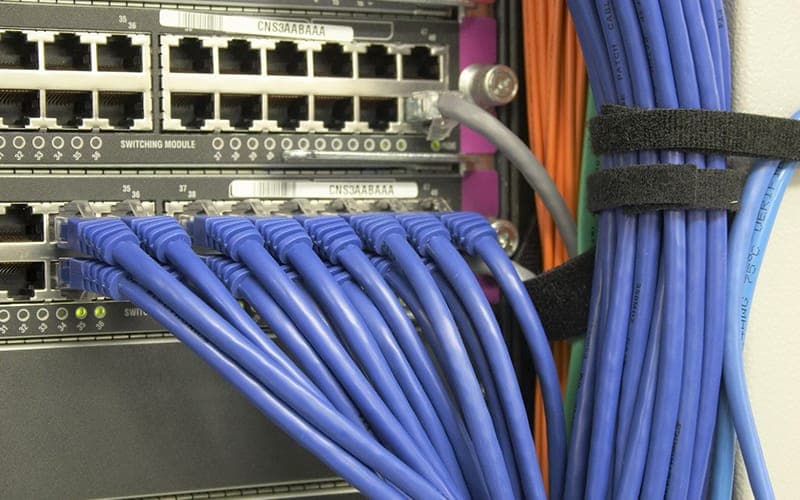
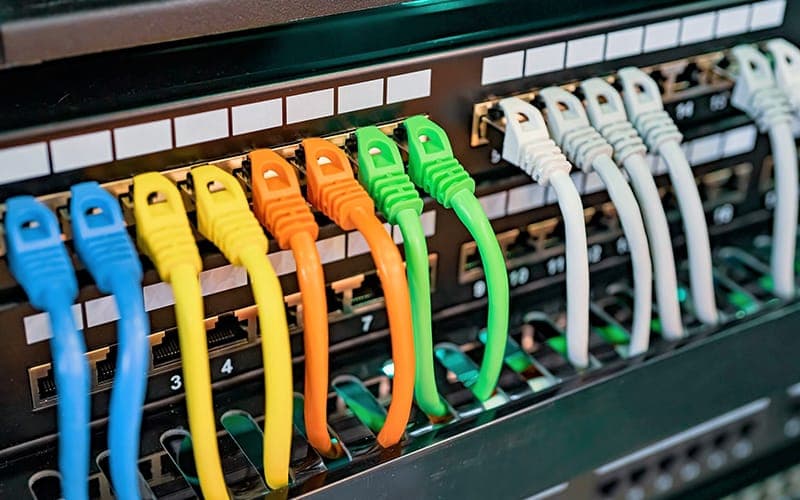
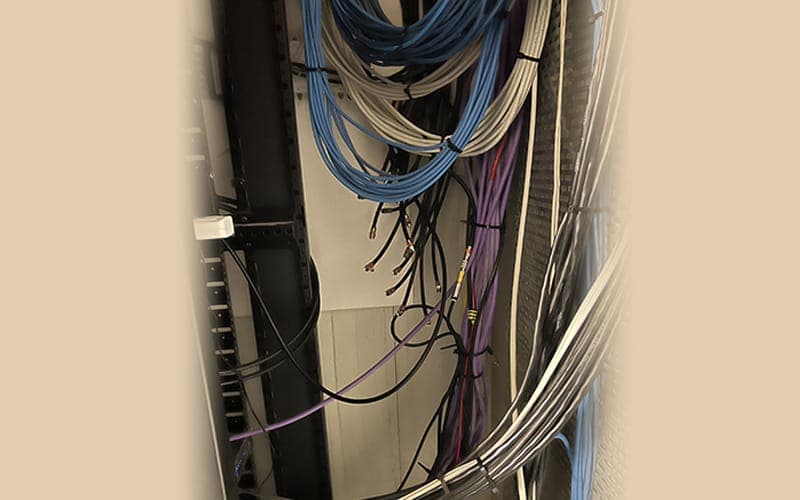
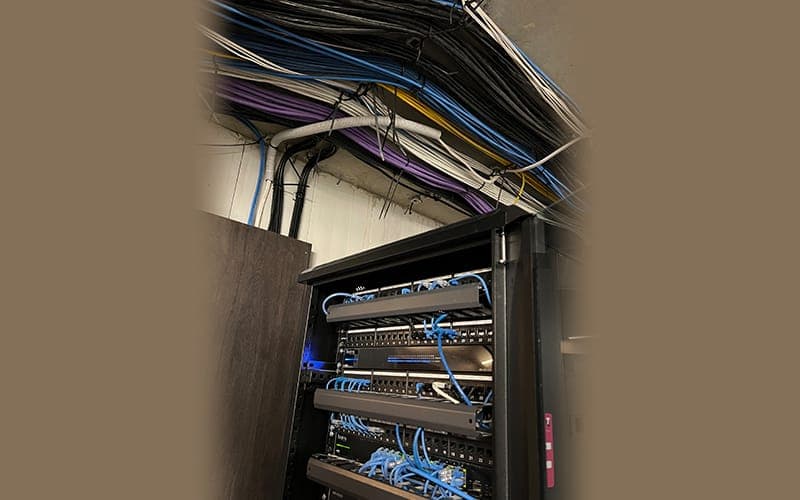
Investing in well-organised and labelled cabling simplifies troubleshooting and maintenance. When cables are neatly arranged and documented, identifying and rectifying issues becomes faster and more efficient, reducing the impact of technical problems on your operations.
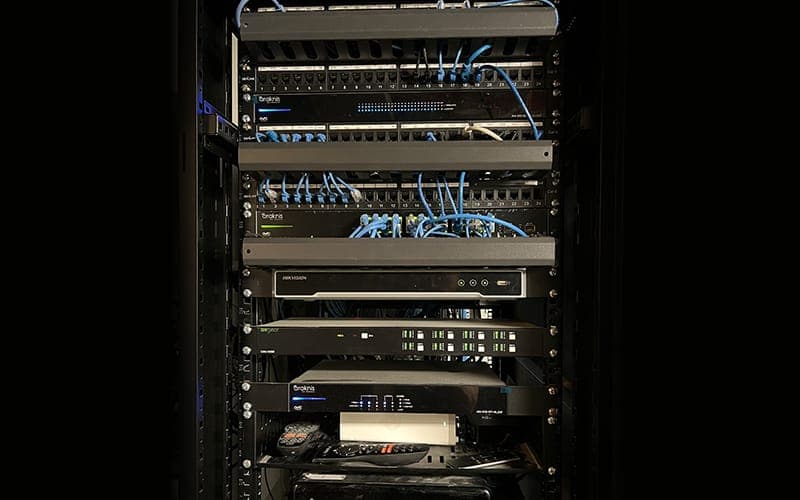
Cabinets, patch panels and switches
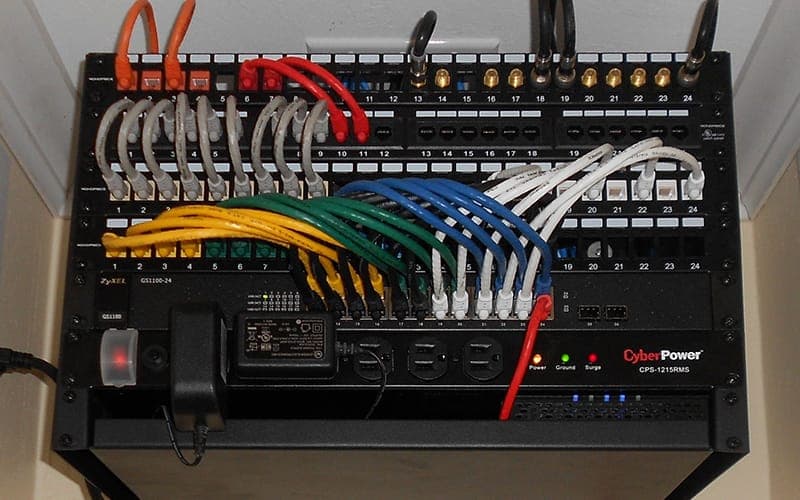
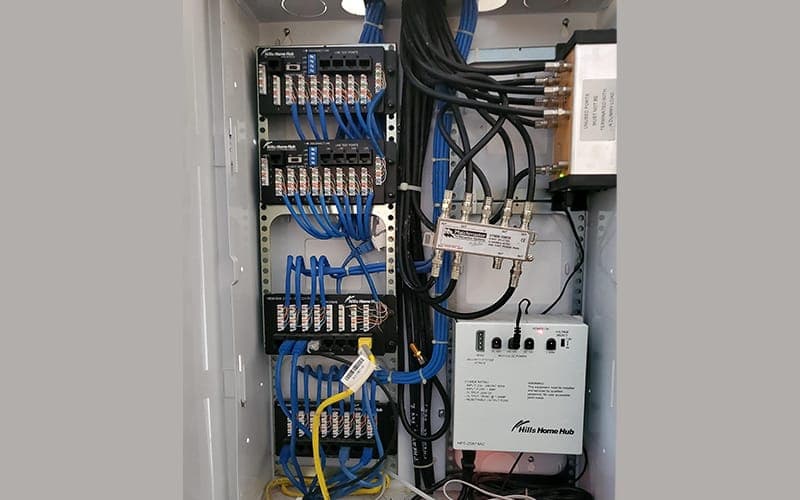
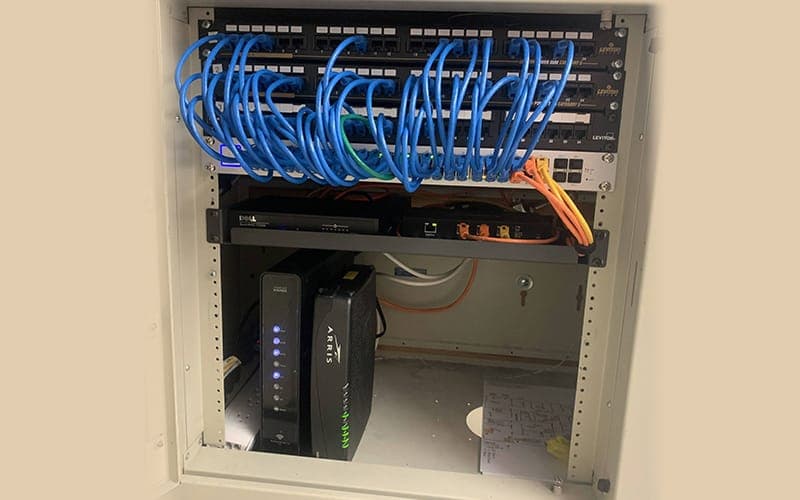
We specialise in supplying and installing data cabinets, patch panels and network switches. Our engineers integrate your chosen components so they function harmoniously.
With a selection of face plates catering to diverse aesthetics, you can easily find one that complements your decor. Once the setup is complete, connecting your devices (TV, computer, gaming console, printer, or any other network device) is as simple as plugging them in.
With a legacy of expertise spanning over 40 years of data cabling and networking, we deliver connectivity solutions that combine innovation and practicality.
Cabling an existing Sydney house
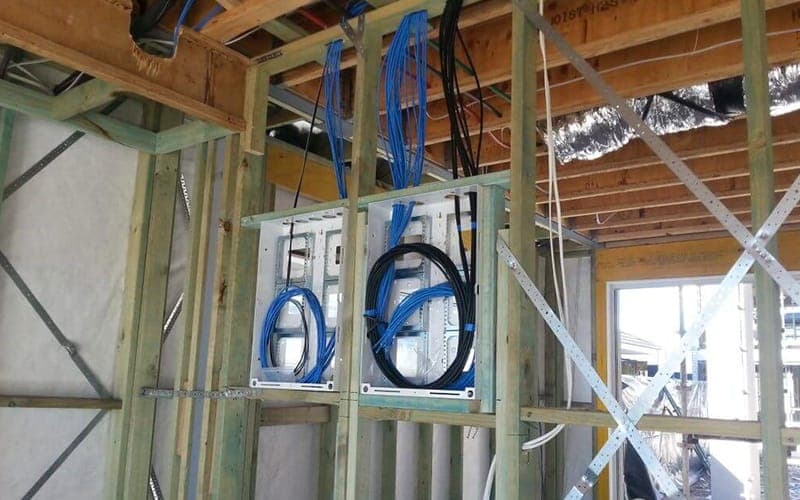
Most of the cabling we do is retrofit rather than new build, and Sydney's housing stock decides how hard that is. A single-storey weatherboard or brick-veneer house with a walkable roof cavity is straightforward: cable drops down inside the wall to a plate beside the power point and nothing is cut. A double-brick semi with a concrete first floor is the other end: there is no cavity to drop through, so the run goes in a slim painted duct, under a floor, or externally and back in.
We walk the house before quoting and tell you which of those each point is. That is the difference between a quote that holds and one that grows once the work starts, and it is the reason we would rather look than estimate over the phone.
Where the cabinet goes, and why it matters
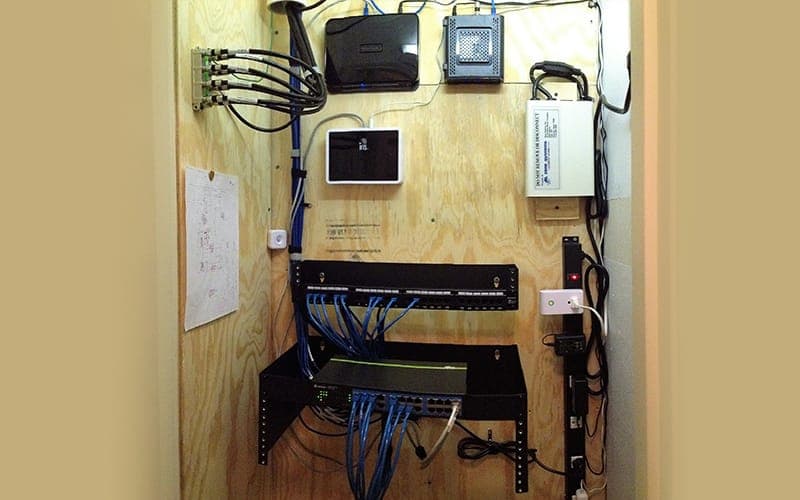
The NBN box is usually wherever the installer found it convenient: a garage wall, the back of a wardrobe, a laundry. That is fine as an entry point and poor as the heart of a network. What we do is bring everything back to one place with power, ventilation and room to work: patch panel, switch, and the modem alongside them, labelled so the next person can read it.
Ventilation is not a detail. A sealed cupboard full of switch and modem in a Sydney February is a warm box, and heat is what kills this equipment. So is labelling: an unlabelled patch panel is a puzzle every time something needs moving, and a labelled one turns a call-out into a two-minute job.
Common questions
- Do I need cabling if the Wi-Fi is already good?
- Wi-Fi and cable do different jobs, and the best homes use both. Anything that sits still and matters (the television, a work computer, a games console, the access points themselves) belongs on cable, because it takes that traffic off the air entirely and leaves the Wi-Fi for the things that move. In a double-brick Sydney house that is often the difference between good coverage and endless fiddling.
- Cat6 or Cat6a?
- Cat6 is the sensible default for a house and will carry 10 gigabit over the distances a home involves. Cat6a is thicker, stiffer and dearer, and it earns its place on long runs or where you know you are heading to 10 gigabit everywhere. What matters far more than the category on the box is how it is terminated: a beautifully-specified cable punched down badly performs worse than a modest one done properly.
- Can you run cable in an existing house without wrecking it?
- In most Sydney houses, yes. Where there is a roof cavity above the room, the cable drops inside the wall and the only thing you see is the new plate. Double brick and rooms with a floor above are the hard ones, and there the honest answer is a slim painted duct or an external run rather than pretending otherwise. We tell you which is which before quoting.
- Is this the same as getting the NBN connected?
- No, and it is a useful distinction. The NBN comes to a single box on your wall; everything past that point is yours, and it is where most household internet problems actually live. We do not connect the NBN. We take what arrives at that box and distribute it properly around the house.
- How many points should each room have?
- Two at each TV position, two at each desk, one at each place an access point might go, and one anywhere you can imagine a device sitting still. The cable is the cheap part of the job; the labour to come back and add one later is not, which is why we would rather put in the extra point now than be called back in two years.
- Can you tidy up cabling someone else installed?
- Regularly, and it is satisfying work. Re-terminating a patch panel, labelling what is already in the walls and testing each run tells you what you actually have, which is often more than the owner thought. It is much cheaper than assuming the existing cabling is useless and starting again.
Request a free quote
Tell us what you need and Ray will come back to you with a price. No obligation. Fields marked with an asterisk are required.
Recent jobs
15 photos





Customer reviews
What customers say about Data & Network Cabling.
He worked very hard under difficult conditions and really helped us out. Very punctual, polite and tidy. He left no mess.
Kate
Baulkham Hills, NSW
Friendly, helpful and quick response.
Michael
Emu Plains, NSW
Did a good job.
Linda
Carlingford, NSW