
02 / Service
TV Antenna Repairs & Extra Points
We are a Sydney antenna service, specialising in diagnosing and fixing TV antenna and aerial faults. Signal dropping out, a snowy picture, or nothing at all: most of it gets found and fixed on the first visit.
A repair, not a renovation.
We do high-end cinema rooms, and the pictures on this site show it — but an antenna fault is a call-out, not a project. Here is what you get either way.
Competitive
Most faults are a cheap fix.
The commonest fault by a distance is a corroded connector, and it is the cheapest thing on the list. We price the repair before anyone talks about a new antenna.
Fast
Same-day, seven days.
Antenna faults are the work we keep same-day capacity for. Ring 0411 594 794 and you get Ray, not a call centre.
Quality
Licensed, insured, warranted.
Fully licensed and insured, with a warranty on every job. A Sydney business that has been doing this since 1994.
Most antenna repairs in Sydney turn out not to be antenna problems. The aerial is the part you can see, so it gets the blame, and on the majority of call-outs it is mechanically sound. The fault is underneath it: a connector that has sat in the weather for a decade, a splitter feeding more outlets than the signal can carry, or coax that was run before digital television existed.
Ray Anjoul has run Creative Sound & Vision since 1994 and goes to every job himself. He came to antennas from forty years in audio engineering, mixing for touring artists and festivals, which is work built entirely on finding where a signal falls apart between the source and the room. A rooftop aerial is the same problem with worse weather.
What actually causes a picture to break up
Almost every reception fault in Sydney is one of five things, and none of them is the television. Knowing which one it is before anybody climbs a ladder is most of the job, and it is why the meter comes out before the toolbox.
- A corroded connector
- The most common fault by a distance, and the cheapest to fix. The F-connector at the mast sits in the weather for a decade; water gets into the braid, the shield corrodes, and the signal drops a few dB every winter until one wet night it falls below what the tuner can decode.
- Too many splitters
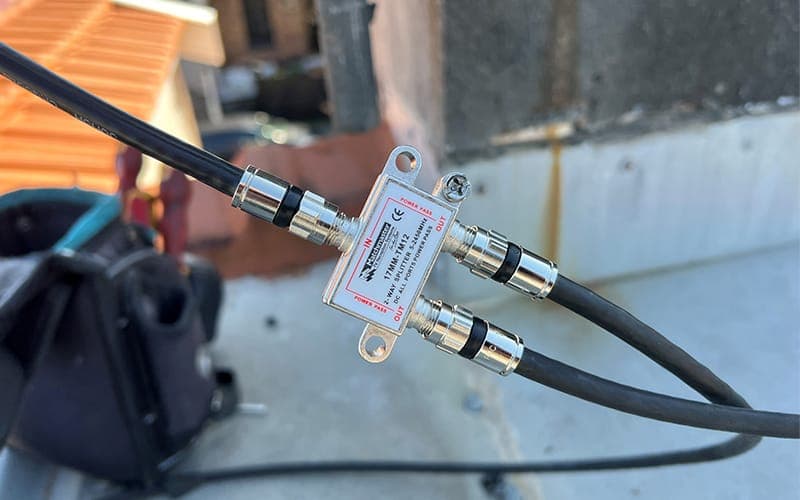
- Every split costs signal. A two-way splitter takes about 3.5 dB, a four-way about 7 dB, an eight-way more than 10 dB. A house that was fine on two TVs and started breaking up when a third and fourth point went in has not developed a fault. It has run out of signal to share.
- Amplification in the wrong place
- An amplifier in the lounge boosts the noise along with the signal, because by then the damage is done. Amplification belongs at the masthead, before the losses, and only where the incoming signal is genuinely weak. Close to Artarmon an amplifier usually makes reception worse, not better.
- The antenna itself
- Elements bent by a storm, a mast that has rotated a few degrees, or a balun that has finally let go. Ten to fifteen years is a normal life inland and less near the water, so on an older house this is a real possibility rather than an upsell.
- Old cable
- Pre-digital coax was never made for these frequencies. If the cable in your roof is the thin black stuff with a single braid, it is leaking signal along its whole length and no antenna will fix that.
What a repair visit actually involves
Signal is read at the antenna first, then again at every outlet in the house. Those two numbers are the diagnosis between them. Strong on the roof and weak at the wall plate means the aerial was never the problem, and replacing it would have fixed nothing. Most visits end with a connector re-terminated, a splitter swapped for one the house can actually afford, or a run of old cable replaced, and the picture back the same afternoon.
That distinction is worth money, because a repair and a replacement are nowhere near each other in price. An aerial that is sound and correctly aimed does not need replacing because a connector has corroded. Where the antenna genuinely is finished, and fifteen years near the water will do it, you get told so with the meter reading that shows it.
Extra antenna points, without lifting your floor
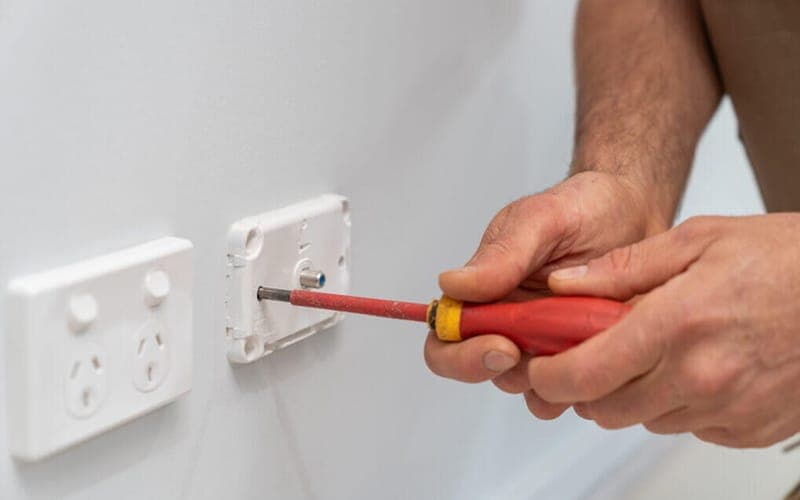
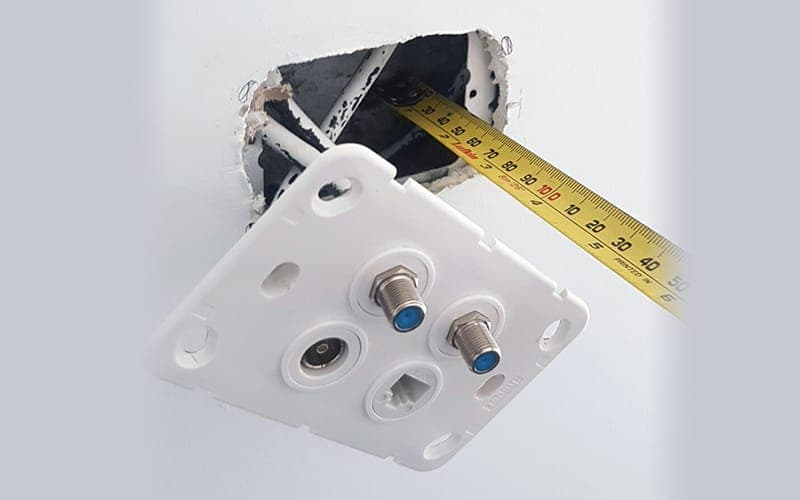
A new outlet in a bedroom or a study is usually run from the roof cavity down inside the wall, which means no chasing, no patching and no floorboards up. Where a wall cannot be dropped (double brick, or a downstairs room with a floor above it), the run goes in a slim duct that gets painted to match, or externally along a fascia and back in behind the TV. We will tell you which of those your house is before quoting, not after starting.
If the house is already at its signal limit, an extra point is the moment that shows up. That is a distribution amplifier rather than a bigger antenna, and it is worth doing at the same visit rather than discovering it a fortnight later.
Common questions
- Why does my TV keep pixelating or dropping out?
- Nine times in ten it is the connection, not the antenna. A corroded F-connector at the mast, a splitter feeding more TV points than the signal can carry, or pre-digital coax still in the roof will all produce exactly the picture you are describing. We meter the signal at the antenna and at each outlet, which tells us where it is being lost rather than guessing, and that is a much cheaper fix than a new antenna.
- It only breaks up when it rains. Is that normal?
- It is common, and it is a symptom rather than the weather's fault. Rain and humidity shave a few dB off a signal that is already marginal, so a system with no headroom fails in the wet and recovers when it dries out. Water getting into a cracked connector does the same thing. Either way the underlying problem is there in fine weather too: the rain is just what exposes it.
- Do I need a new antenna or just a repair?
- Most of the jobs we go to are repairs. If the antenna is physically sound and pointed correctly, replacing a connector, re-terminating the cable or fixing the splitting will get the picture back for a fraction of a new install. We will tell you honestly which one you are looking at, and we would rather do the small job well than sell you the big one.
- Will an amplifier fix my reception?
- Only if the problem is genuinely weak signal, and in a lot of Sydney it is not. An amplifier boosts noise as enthusiastically as signal, so fitting one in the lounge room usually achieves nothing, and close to the Artarmon transmitter it can overload the tuner and make a good picture worse. Where an amplifier is the right answer it goes at the masthead, ahead of the splitters.
- Everything was fine until we added a third TV. What changed?
- You ran out of signal to divide. Each split costs you: roughly 3.5 dB on a two-way, 7 dB on a four-way. So a house that was comfortably above the threshold on two outlets can fall below it on four. The fix is usually a distribution amplifier sized to the number of points, not a bigger antenna.
- Can you add a TV point to a room that has never had one?
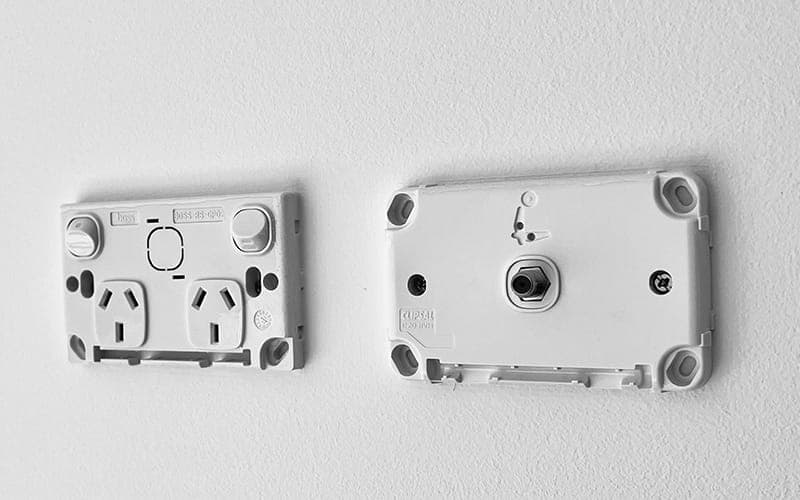
- Almost always, and usually without lifting a floorboard. The cable comes from the roof cavity and drops inside the wall to a plate beside the power point. Double brick and downstairs rooms are the exceptions, where it becomes a painted duct or an external run. We will tell you which one applies at the quote.
- Can you come today?
- Often, yes. Antenna faults are the work we keep same-day capacity for, because a house with no television is a different kind of problem to a home cinema that can wait until Thursday. Ring rather than fill in a form if it is urgent. Ray answers his own phone.
Request a free quote
Tell us what you need and Ray will come back to you with a price. No obligation. Fields marked with an asterisk are required.
Recent jobs
4 photos
Customer reviews
What customers say about TV Antenna Repairs.
Ray was polite, punctual and very thorough, working through the issues methodically to diagnose and solve the problems with my TV reception.
Andrew
Paddington, NSW
Ray was good, very informative, and he gave me options on how to resolve the issues we were having with the aerial.
Lynda
Cranebrook, NSW
They arrived when they said. He talked me through what was wrong and solved my problem with my aerial.
Coral
Minchinbury, NSW