
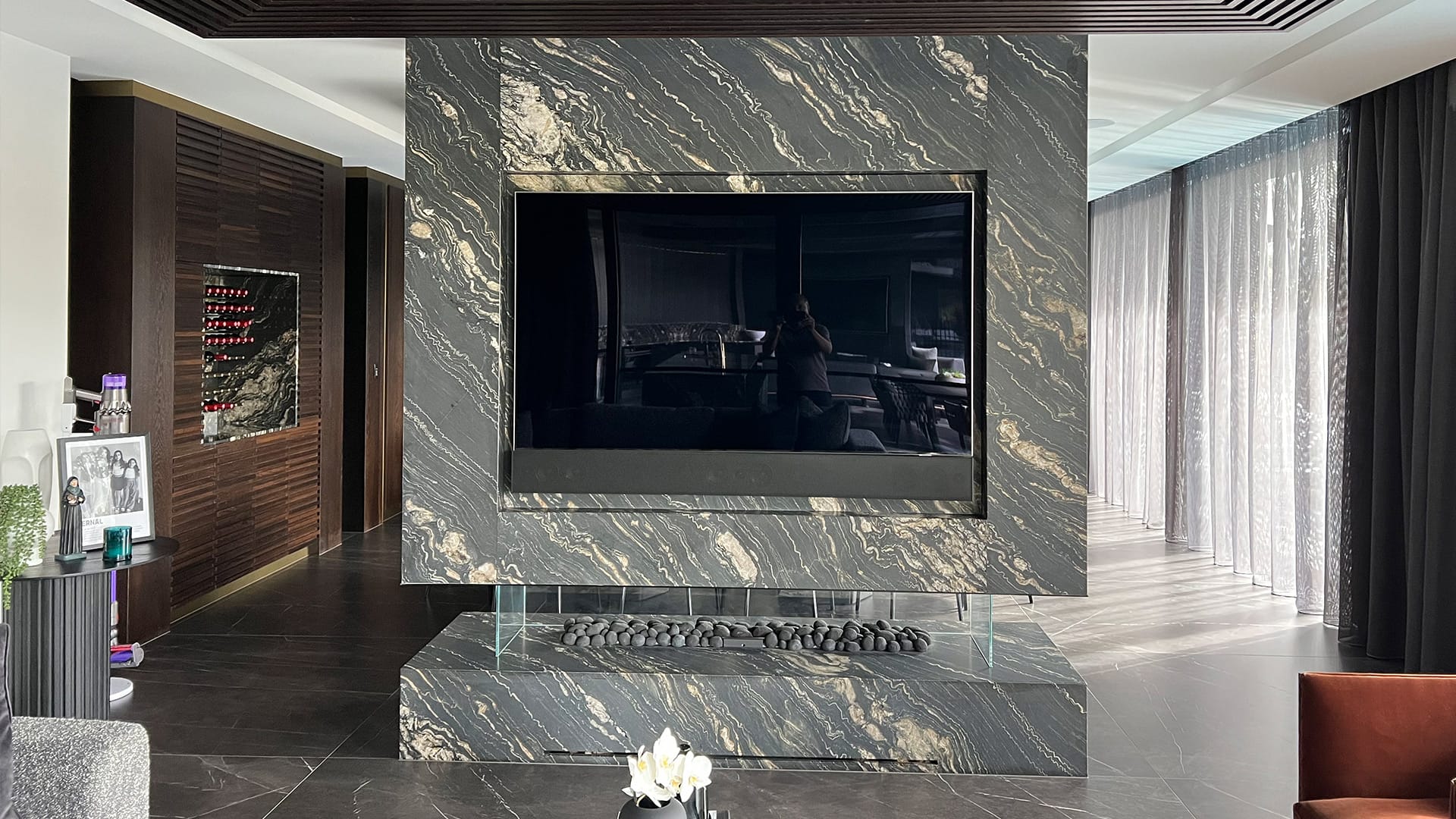
Cable concealment is the difference between a TV that looks installed and one that looks hung. It is also the part most handymen skip. Ray treats it as part of every TV wall mounting job, and he can also come back and tidy up a TV someone else mounted.
01How we hide TV cables
- Plan the route. Find studs, noggins, pipes and existing wiring before anything is cut.
- Recess the connections. Fit recessed wall plates behind the TV so the screen can sit close to the wall.
- Run the cables in the cavity. HDMI, antenna and data are fished down inside the wall to the cabinet or a low wall plate.
- Power done safely. Power to the TV position is provided compliantly, never by pushing an extension lead through the wall.
- Make good. Holes are kept small and patched, and the area is cleaned up before Ray leaves.
02Every wall type in Sydney
- Gyprock / plasterboard
- The quickest and cleanest. Cables run inside the cavity with small access holes.
- Double brick
- Common in older Sydney homes. Options include chasing a channel and rendering over it, or a slim painted cover where chasing is not practical.
- Stone and feature walls
- Planned around the stone joints or run behind the feature panel so the finish is not damaged.
- Timber panelled walls
- Cables are routed behind the panels and hidden at the joins.
Building or renovating? It is far cheaper to put conduit in before the walls close. See our pre-wiring checklist.
03Common questions
Can you hide cables for a TV that is already mounted?
Yes. Ray can take the TV down, run the cables inside the wall and remount it, often in a single visit.
Can cables be hidden in a brick wall?
Usually, yes. Brick walls are chased and patched, or a slim cover is fitted where chasing is not suitable.
Is it safe to run power behind the TV?
Power must be installed compliantly. Ray never runs an appliance lead through a wall, and arranges a proper power point where needed.
Can my soundbar and set-top box cables be hidden too?
Yes. All the cables for your soundbar, streaming box and game console can be routed to a cabinet or a wall plate below.